A Practical Guide to Dog Introductions
Bringing a new dog into your home is an exciting milestone, but the first meeting is critical. Learning how to introduce a new dog to your resident dog correctly sets the tone for their entire relationship. A thoughtful, patient introduction reduces the risk of conflict and helps your pets build a positive, lasting bond.
Listen: A Conversation on Calm Introductions
Table of Contents
The “Golden Rule”: Manage the Environment, Not the Dogs
The secret to a successful introduction is to manage the environment. This means removing triggers, staying calm, and giving your dogs space to choose. Never force them to “sort it out” on their own; that approach often leads to fear and conflict. By creating a positive, low-pressure situation, you set the stage for success.

Scenario A: How to Introduce a New Dog to Your Resident Dog on Neutral Ground
This is for adopters who are bringing their resident dog to meet the new dog for the first time, often at a dog-friendly park or neutral space near the rehoming family’s house.
Step 1: The Parallel Walk (5-10 Minutes)
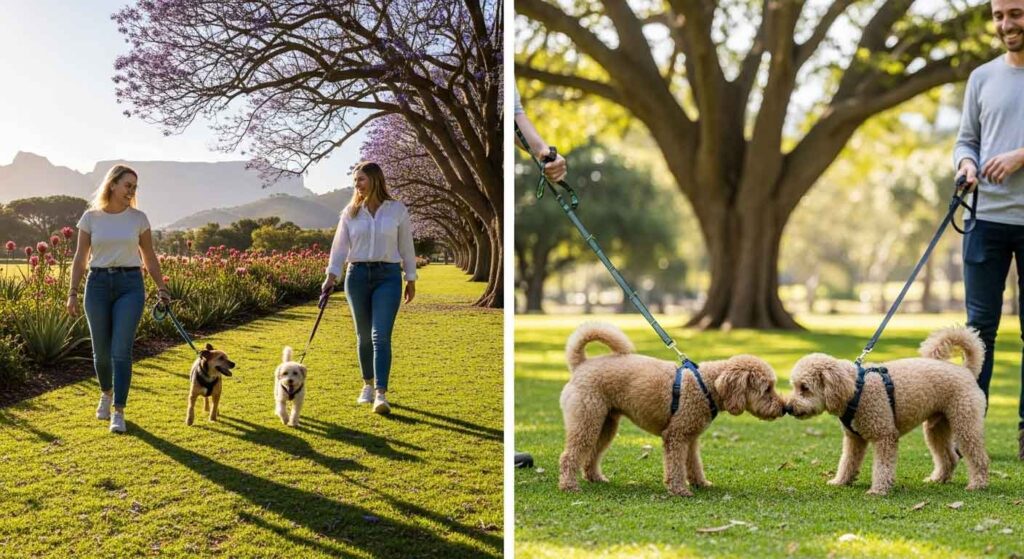
This is the most important step. Do not let the dogs meet face-to-face immediately. With two handlers, walk both dogs on loose but secure leashes in the same direction, but with plenty of space between them. This allows them to get comfortable with each other’s presence at a distance.
However, if either dog is not used to a leash and it causes them significant stress, it is better to skip the parallel walk. In this case, the first introduction should take place in a secure, fully-enclosed neutral space (like a friend’s yard or a safely fenced-in park) where they can move around freely off-leash while you supervise from a distance.
Step 2: The Brief “Hello” Sniff (3 Seconds Max)
After a few minutes of calm walking, you can allow a very brief, 3-second sniff of each other’s scent (usually at the rear). Keep the leashes loose but ready. After 3 seconds, cheerfully call them away and continue walking. Note: Not all dogs need to do this on the first meeting. For very nervous dogs, a successful parallel walk is a huge win on its own!
Step 3: Aligning with the Human “Meet & Greet”
Remember, this dog introduction happens alongside the steps in our main Meet & Greet Guide. The goal is a calm, positive experience for everyone—human and canine.
Scenario B: How to Introducing the New Dog at Your Home
This is for adopters who have already completed the adoption and are now bringing their new dog home to meet their resident dog for the first time.
Step 1: The “Reset” Walk Home
Before you even get to your front door, reset the energy. Have a friend or family member meet you a block away with your resident dog. Take both dogs for a short, 5-minute parallel walk together. It doesn’t need to be long—just enough to help them enter the house as a loose “pack.”
Step 2: Prepare Your Home (Remove Food, Bowls & “Treasures”)
Before you bring the new dog inside, do a quick sweep. Temporarily pick up all food bowls, toys, and high-value chew toys. This simple step removes over 90% of potential conflict points, as there is nothing for them to “guard.” You can reintroduce these items in a few days.
Step 3: The Introduction (Garden First, Then House)
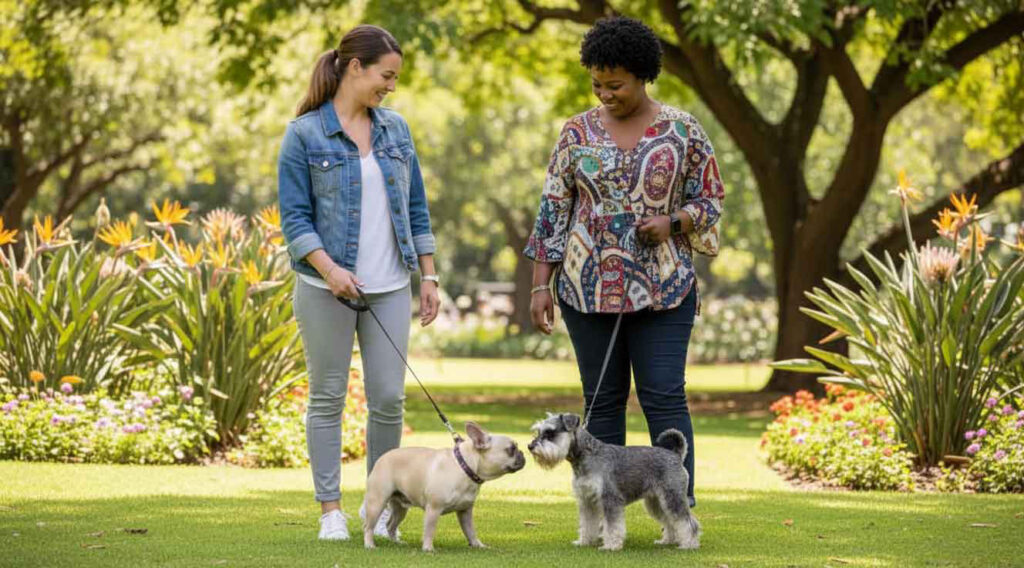
Let your resident dog into your secure garden first. Then, bring the new dog into the garden, keeping their leash loose so they don’t feel restrained. Let them sniff and explore separately. After a few calm minutes, you can drop the leash and let them interact naturally while you supervise. Once calm, bring them inside together.
Step 4: Supervise Short, Calm Sessions
For the first few days, aim for short, calm, and positive interactions. Don’t expect them to play or cuddle immediately. Reward them with praise when you see them peacefully ignoring each other. Peaceful coexistence is the first goal; friendship comes later. Keep the energy positive and relaxed.
What to Watch For: Understanding Dog Body Language
Green Flags
(Signs of a Good Interaction):
- Relaxed, “soft” bodies: No tension in the face or muscles.
- Play bows: The classic “front end down, rear end up” invitation to play.
- Ignoring each other: This is a fantastic sign! It shows they are comfortable and not threatened.
- Calm, loose tail wags: A gentle, full-body sway, not a stiff, high-speed wag.
- Taking turns sniffing: A respectful “getting to know you” behavior.
- Mirroring each other’s behavior (e.g., sniffing the same spot)
Red Flags
(Signs to Intervene and Create Space):
- Stiff, frozen body: This is often the first sign of discomfort, right before a growl or snap.
- A hard, direct stare: This is a challenge, not a friendly greeting.
- Lip curling or showing teeth: An obvious warning sign.
- A low growl: The dog is clearly communicating its discomfort. Listen to it.
- “Whale eye”: When you can see the whites of their eyes, it’s a sign of high stress.
- Mounting or humping (often a sign of stress, not just play)
The Journey Ahead: Cultivating a Peaceful Home
Remember, you are building a relationship. The “slow is fast” rule applies here: the slower and calmer the introduction, the faster trust builds. Some dogs become instant friends, while others learn to be respectful roommates. Both are a huge success!
The first few days and weeks are a marathon, not a sprint. Celebrate the small victories: a shared moment of calm on the couch, a peaceful walk together, or simply ignoring each other in the same room. These are the building blocks of a happy, multi-dog household.
Most importantly, you are not alone. If you see repeated signs of tension or conflict, don’t wait—early guidance from a professional can make all the difference. Please don’t hesitate to reach out. We are always here to support you and your growing family.
Your Printable Quick-Reference Cheatsheet
We’ve created a simple, one-page guide with the key steps that you can download and print. It’s a great reminder to have on hand for the big day.